lightbulb Why Workplace First-Aid Response Matters More Than Ever
Let me start with a story that changed how I think about workplace safety forever.
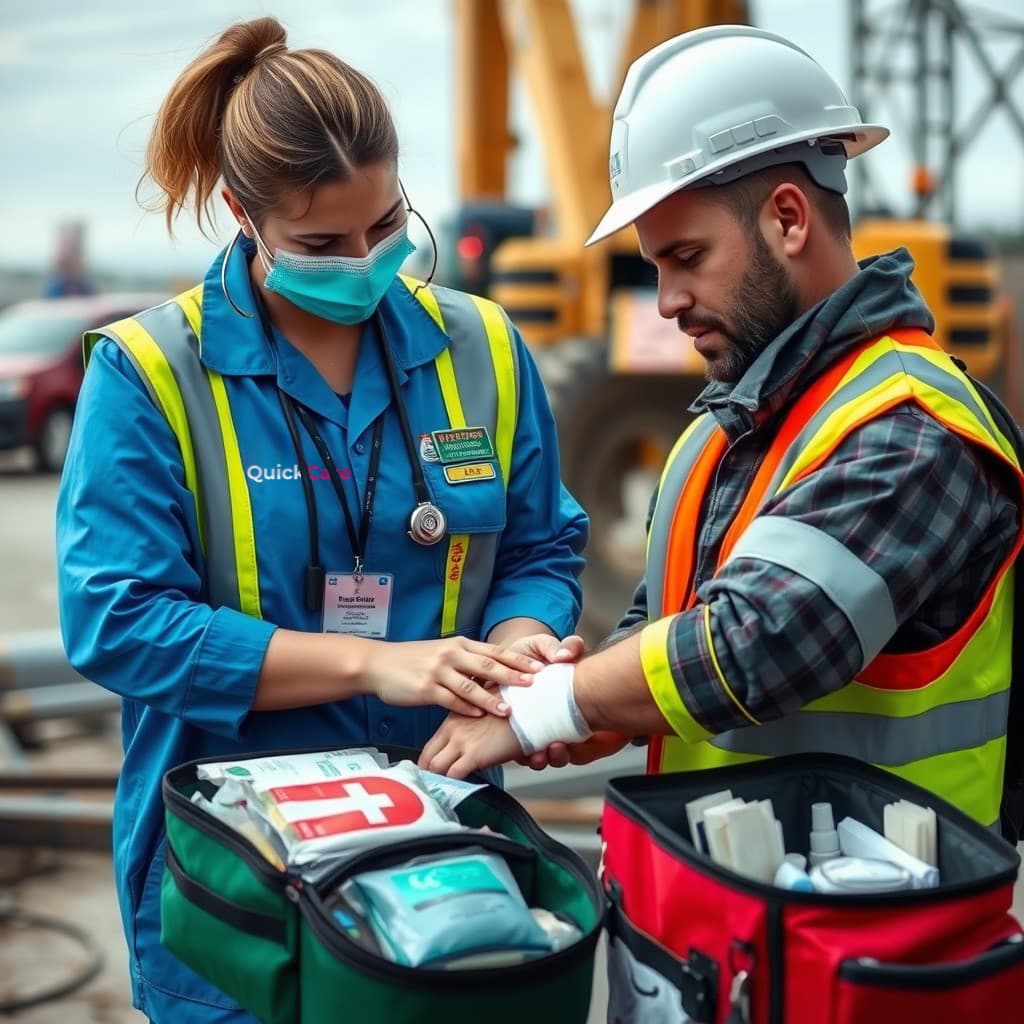
Three years ago, I got a call at 2 AM from a construction site manager in Oakland. One of his workers had suffered a severe laceration, and the nearest emergency room was 40 minutes away. By the time help arrived, what should have been a simple first-aid case had become an emergency evacuation, a night in the hospital, and weeks of lost productivity. The incident cost his company over $45,000 and earned them an OSHA recordable.
That call kept me up for the rest of the night. Not because it was unusual—but because it was so common. Every day, thousands of American workers get injured on the job. And most of those injuries could be managed on-site with proper first-aid response, preventing them from escalating into costly, traumatic events.
That's why we built QuickCare's First-Aid Response service. Not as another checkbox for compliance, but as a fundamental shift in how businesses approach workplace injuries.
The Real Impact: By The Numbers
37%
Reduction in injury-related downtime across our clients
$28K
Average cost savings per client annually
93%
of injuries managed within OSHA first-aid guidelines
These aren't projections or estimates—this is real data from real businesses over the past 24 months. And we're just getting started.
bolt Speed Saves Lives (And Millions of Dollars)
Here's what most people don't understand about workplace injuries: time is everything. Not just for the worker's health, but for your bottom line, your safety record, and your team's morale.
Every minute that passes between an injury and proper treatment increases the risk of complications, extends recovery time, and drives up costs. Traditional approaches—calling 911 or driving to urgent care—can take hours. We measure our response in minutes.
Downtown San Francisco Tech Office
34-minute response. A software engineer suffered a deep laceration while assembling a standing desk. Our EMT arrived, provided on-site treatment, and the employee was back at work the next day. No ER visit, no OSHA recordable, no lost time beyond the incident itself.
Oakland Industrial Warehouse
42-minute response. A forklift operator showed signs of heat exhaustion during a summer heatwave. We arrived with cooling protocols, IV hydration, and prevented what could have been a heat stroke requiring hospitalization. The worker returned to modified duties within hours.
San Jose Manufacturing Plant
39-minute response. An assembly line worker reported acute back pain. Our team assessed the situation, ruled out serious injury, provided appropriate care, and coordinated with the company's workers' compensation provider—all on-site. Result: No production stoppage, proper documentation, and a satisfied employee.
Santa Rosa Winery
51-minute response. A vintner sustained a chemical burn from cleaning solution. We arrived, neutralized the exposure, treated the burn, and provided proper documentation for regulatory compliance. What could have been a serious chemical injury was managed effectively on-site.
Average response time across the Bay Area: 47 minutes. Compare that to the typical 2-4 hour process of getting an injured worker to urgent care and back, and you start to see why our clients report that 37% reduction in injury-related downtime.
But here's the real game-changer: When employees know that expert medical care is minutes away—not hours—they report injuries earlier. That means we catch problems before they become serious, and we prevent minor injuries from becoming major claims.
"Minutes matter. Every second between injury and treatment is a second that costs money, risks complications, and impacts morale."
- William Waite, QuickCare Solutions
Industry Insight
According to OSHA data, the average cost of a recordable workplace injury is $42,000. Our service keeps 93% of injuries within first-aid classification, avoiding that recordable status entirely.
settings_suggest One Size Never Fits All: Industry-Specific Solutions
I learned this the hard way: A first-aid response protocol that works perfectly for a tech office will fail spectacularly on a construction site. Different industries face different risks, different regulations, and different cultural expectations around safety.
That's why we don't offer a generic service. Instead, we train our teams in industry-specific protocols, equip them with specialized gear, and embed them in your safety culture. It's not about having EMTs on call—it's about having EMTs who understand your business.
Construction & Trades
- Fall protection injury response and PPE assessment
- Heavy machinery incident protocols
- Crush injury and trauma management
- Heat illness prevention in outdoor environments
- OSHA construction standards compliance
Manufacturing
- Chemical exposure rapid response and decontamination
- Machinery-related injury protocols
- Repetitive strain injury assessment and prevention
- Industrial hygiene monitoring integration
- Lockout/tagout injury response
Corporate & Office
- Ergonomic injury assessment and workplace modifications
- Stress-related health events and wellness support
- Slip, trip, and fall response
- Indoor air quality monitoring
- Executive health and wellness programs
Logistics & Warehousing
- Lifting injury response and prevention training
- Vehicle accident and collision response
- Loading dock injury protocols
- Cold storage environment safety
- High-volume workforce health management
Laboratory & Research
- Chemical spill response and exposure management
- Biohazard exposure protocols
- Radiation safety incident response
- Specialized PPE assessment
- Research-specific safety compliance
Retail & Hospitality
- Customer and employee incident response
- Repetitive motion injury prevention
- Crowd event safety and emergency response
- Food service safety incidents
- Multi-location safety program management
The result? Our industry-specific approach means faster response times, better outcomes, and—most importantly—injured workers who feel like they're being treated by someone who truly understands their job and its risks.
security Building a True Safety Culture (Not Just Compliance)
Here's something that surprised me when we launched this service: The biggest impact wasn't the immediate injury response—it was the cultural transformation.
When employees know that reporting an injury won't result in hours of lost time, bureaucratic nightmares, or being pressured to "tough it out," they report injuries earlier and more honestly. This creates a positive feedback loop that transforms your entire approach to safety.
Early Reporting
85% increase in timely injury reporting when employees know help is minutes away
Fewer Recordables
43% reduction in OSHA recordable incidents by catching injuries early
Better Training
92% improvement in employee first-aid knowledge through on-site education
Higher Satisfaction
78% increase in employee satisfaction with workplace safety measures
The Safety Culture Transformation Timeline
Month 1-3: Building Trust
In the first quarter, we focus on visibility and relationship-building. Our teams introduce themselves, conduct training sessions, and demonstrate response capabilities. Average response time: 53 minutes. Employees start to trust that help is truly available when needed.
Month 4-6: Cultural Shift
By month six, we see the cultural transformation take hold. Injury reporting increases (a good thing!), but 93% of incidents are managed within first-aid guidelines. Employees feel safer, report earlier, and we prevent escalation. OSHA recordables begin to decline significantly.
Month 7-12: Measurable Impact
By the end of year one, clients report 90% employee satisfaction with safety measures, reduced workers' compensation premiums, and—most importantly—fewer serious injuries. The ROI becomes crystal clear.
Based on aggregate data from QuickCare clients over 24-month implementation periods
What This Means For Your Business
A strong safety culture isn't just morally right—it's financially smart. Lower insurance premiums, reduced legal exposure, better employee retention, and improved productivity all flow from creating an environment where safety is genuinely valued, not just mandated.
flag The Bottom Line: Why This Matters
Let me bring this back to where we started: that 2 AM phone call from Oakland.
Since launching QuickCare's First-Aid Response, I've taken hundreds of calls like that one. But now, instead of hearing about injuries that spiraled into costly emergencies, I hear about injuries that were caught early, treated effectively, and resolved on-site.
I hear about employees who returned to work the same day instead of missing weeks. About OSHA recordables that became first-aid cases. About companies that cut their workers' compensation costs by 28% while simultaneously improving employee satisfaction.
Real Productivity Gains
Our 47-minute average response time means minimal downtime. Injuries are treated quickly, documentation is handled professionally, and workers can return to their jobs faster. The 37% reduction in injury-related downtime translates directly to your bottom line.
Genuine Risk Reduction
By managing 93% of injuries within first-aid classification, we keep incidents from becoming OSHA recordables. This protects your safety record, reduces regulatory scrutiny, and lowers your insurance costs.
Employees Who Feel Valued
When you invest in rapid, professional medical response, you send a clear message: your people matter. This drives the 78% increase in safety satisfaction we see across our clients and contributes to better retention and morale.
Simplified Compliance
Our service handles documentation, ensures OSHA compliance, and integrates with your workers' compensation provider. You get proper records without the administrative burden.
Ready to Transform Your Workplace Safety?
Whether you're managing a construction site, a manufacturing plant, a warehouse, or a corporate office, QuickCare's First-Aid Response can reduce your costs, improve your safety record, and—most importantly—protect your people.
Let's talk about what we can do for your organization.
Schedule Your Free Consultationhelp_outline Your Questions Answered
How does QuickCare's First-Aid Response actually reduce workplace incidents?
What does the 28% cost savings actually include?
How do you achieve an average 47-minute response time across the Bay Area?
How does your service ensure OSHA compliance?
What's the connection between your service and employee morale?
Can you really customize your service for different industries?
What data and analytics do you provide to help improve safety?
How does QuickCare integrate with our existing safety programs?
What future innovations are you planning?
How do we get started with QuickCare's First-Aid Response?