We work with research and development labs, biotech and pharma teams, clinical and diagnostic labs, university teaching labs, quality control labs, environmental testing, and pilot manufacturing lab spaces. Services scale from small teams to multi-shift operations.
On-Site Laboratory Safety Services
Keep research and testing moving while protecting your team. QuickCare delivers on-site respirator fit testing, drug & alcohol testing, and first-aid response built for lab environments—supported by clear documentation for audits, incident reviews, and compliance.
24/7
First-Aid Response
On-Site
Fit Testing & Collections
Audit-Ready
Documentation
Services scale from small teams to multi-shift operations. See Service Map for coverage details.
Built for Laboratories
Labs operate differently than general workplaces: specialized hazards, controlled access areas, time-sensitive workflows, and strict documentation expectations. QuickCare supports EHS and lab managers with on-site services that reduce disruption while strengthening compliance and safety culture.
- check_circle Annual respirator fit testing and documentation
- check_circle Medical clearance workflows for respirator users
- check_circle Drug-free workplace testing with defensible procedures
- check_circle On-site first aid for exposures, burns, cuts, and sharps
Laboratory Safety Challenges
Laboratories combine hazardous materials with precision work. The goal is not only compliance—it is preventing exposures, keeping experiments intact, and reducing downtime from avoidable incidents.
Chemical Hazards
From solvents to corrosives, labs handle substances where a small mistake can become an exposure event. Respiratory protection, PPE practices, and rapid first aid matter—especially during transfers, cleanup, and unexpected reactions.
- chevron_right Toxic, corrosive, or sensitizing chemicals
- chevron_right Flammables and reactive compounds
- chevron_right Volatile vapors and aerosol-generating processes
- chevron_right Carcinogens and mutagens requiring strict controls
Potential consequences: chemical burns and skin irritation; respiratory irritation or inhalation exposure; fire risk from improper handling or storage.
Biological Hazards
Clinical specimens, cultures, and biological materials introduce exposure risk through sharps, splashes, aerosols, or contact transmission. A reliable response plan and documentation helps protect staff and supports post-exposure evaluation.
- chevron_right Bacteria, viruses, and fungi
- chevron_right Cell cultures, tissues, and clinical specimens
- chevron_right Biological toxins and sensitizers
- chevron_right Sharps and contamination pathways
Potential consequences: infection or contamination events; allergic reactions or sensitization; secondary transmission concerns.
Physical Hazards
High-precision tasks, repetitive pipetting, cold rooms, and specialty equipment can create injuries that build over time. Proactive controls and early response reduce the chance of recordable injuries and lost time.
- chevron_right Ergonomic strain from repetitive tasks
- chevron_right Radiation sources (ionizing and non-ionizing)
- chevron_right Noise and vibration from equipment
- chevron_right Heat/cold exposure (autoclaves, cryogenics, cold rooms)
Potential consequences: musculoskeletal disorders; burns or cold injuries; hearing damage with prolonged exposure.
Operational Safety Hazards
Centrifuges, compressed gases, electrical equipment, and wet workspaces introduce injury risk—especially when fatigue or impairment impacts judgment. Programs that reinforce readiness help reduce preventable incidents.
- chevron_right Autoclaves, centrifuges, and pressurized systems
- chevron_right Compressed gases and cryogenic materials
- chevron_right Electrical hazards from instrumentation
- chevron_right Slips, trips, and falls in wet areas
Potential consequences: cuts, punctures, and lacerations; thermal/chemical/cryogenic burns; falls and impact injuries.
QuickCare Services for Laboratories
On-site services that support lab operations: schedule-friendly delivery, consistent procedures, and documentation you can actually use.
Respirator Fit Testing for Laboratory Personnel
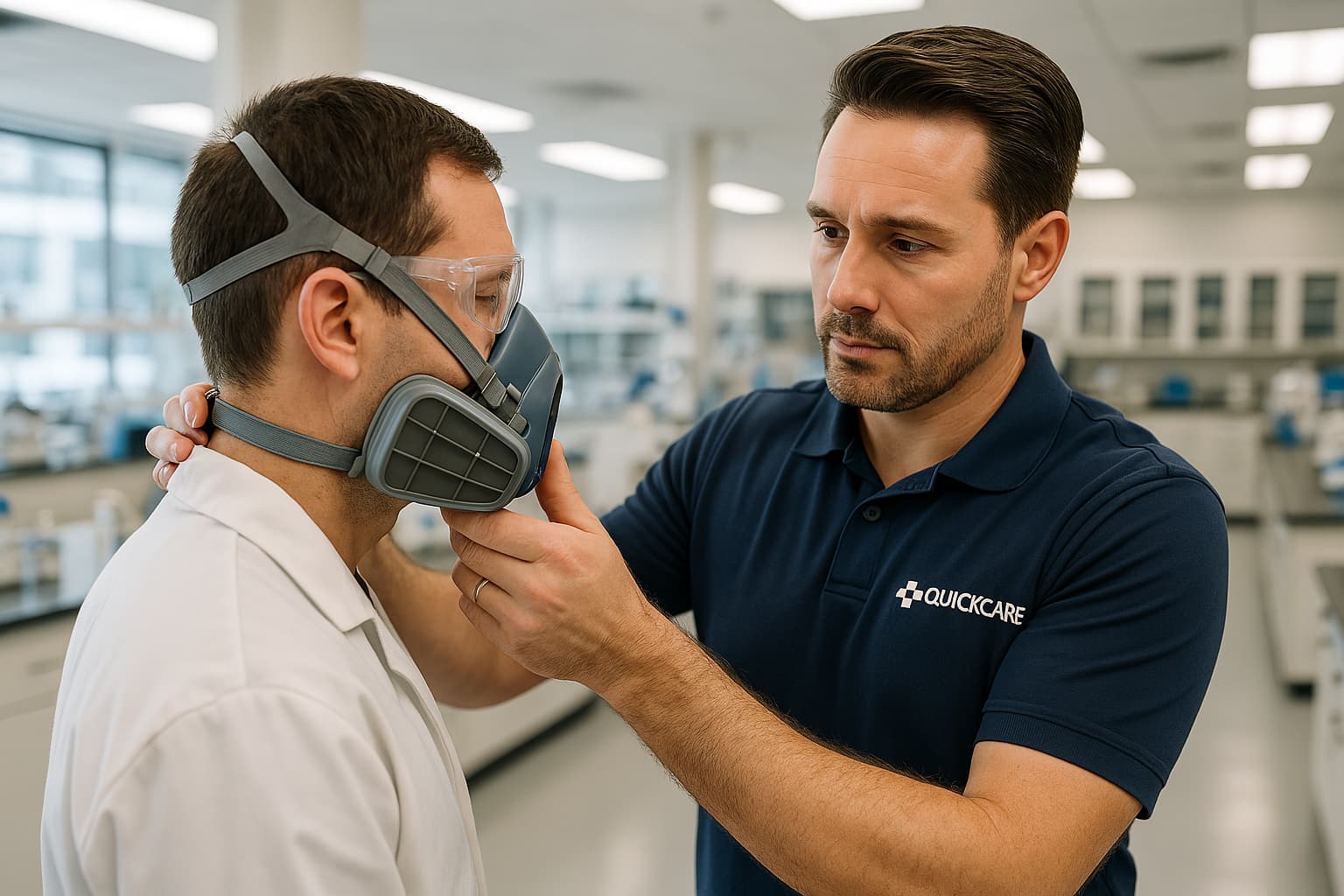
Lab work can involve vapors, aerosols, powders, and biological particulates. QuickCare provides on-site respirator fit testing and supporting workflows so your team has the correct seal, clear training, and audit-ready documentation. We help you maintain alignment with OSHA respiratory protection requirements and support lab-specific controls under the Laboratory Standard.
OSHA Respiratory Protection Alignment
Supports 29 CFR 1910.134 fit testing, training, and documentation expectations for tight-fitting respirators.
Lab-Appropriate Fit Testing
Protocols designed for common lab respirators (e.g., N95 and elastomeric half-face models) used for particulates and certain airborne hazards.
Medical Clearance + Training Workflow
Streamlined medical clearance and user training so staff understand seal checks, limitations, and care/maintenance practices.
On-Site Scheduling That Fits Lab Work
We coordinate around shift coverage, controlled access areas, and workflow constraints to reduce interruptions to critical work.
Respirator Fit-Test Package
Complete respiratory protection.
$149 per employee
- check_circle Fit testing (one mask)
- check_circle Medical clearance by physician
- check_circle Respirator training
- check_circle Digital documentation
- check_circle On-site service at your laboratory
Drug & Alcohol Testing for Lab Readiness
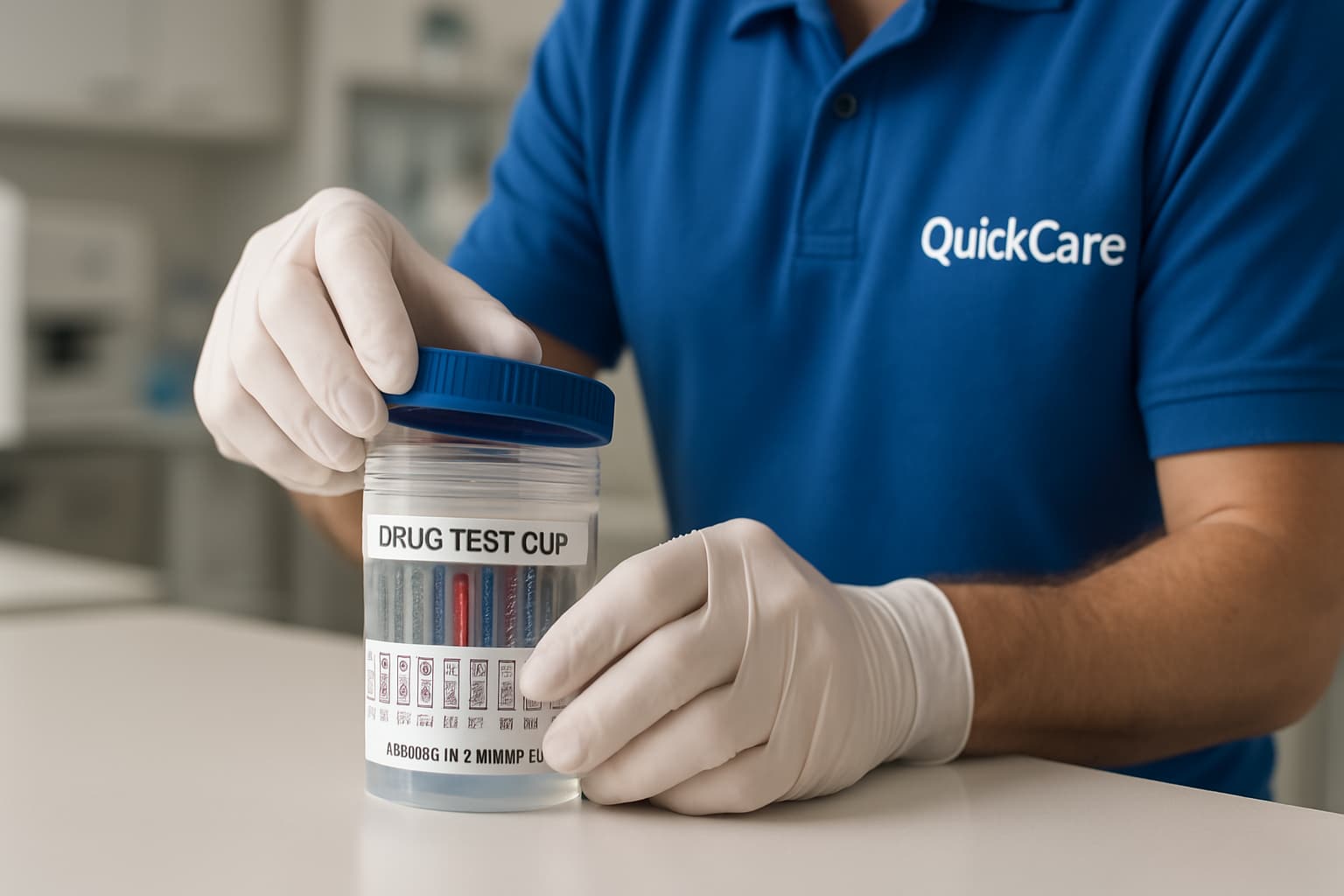
Labs rely on precision, judgment, and careful handling of hazardous materials. A well-run drug-free workplace program helps reduce impairment risk, supports investigations after incidents, and reinforces a culture of safety. QuickCare provides on-site testing with professional collection procedures and options that fit your policy.
Reduced Impairment Risk
Helps lower the likelihood of errors and accidents around chemicals, sharps, and specialized equipment.
Policy-Friendly Options
Support for pre-employment, random, post-incident, and reasonable suspicion testing aligned to your internal program.
Defensible Collection Procedures
Professional, confidential collection process designed to support reliable results and clean documentation.
On-Site Convenience
Avoids off-site clinic trips so teams stay on schedule and supervisors keep coverage in controlled access areas.
Laboratory Drug Testing
Mobile toxicology services.
$82 per test
- check_circle Rapid point-of-care testing
- check_circle Results typically available in ~15 minutes
- check_circle Certified collection procedures
- check_circle Multiple panel options available
- check_circle Laboratory confirmation available
On-Site First Aid for Laboratory Incidents
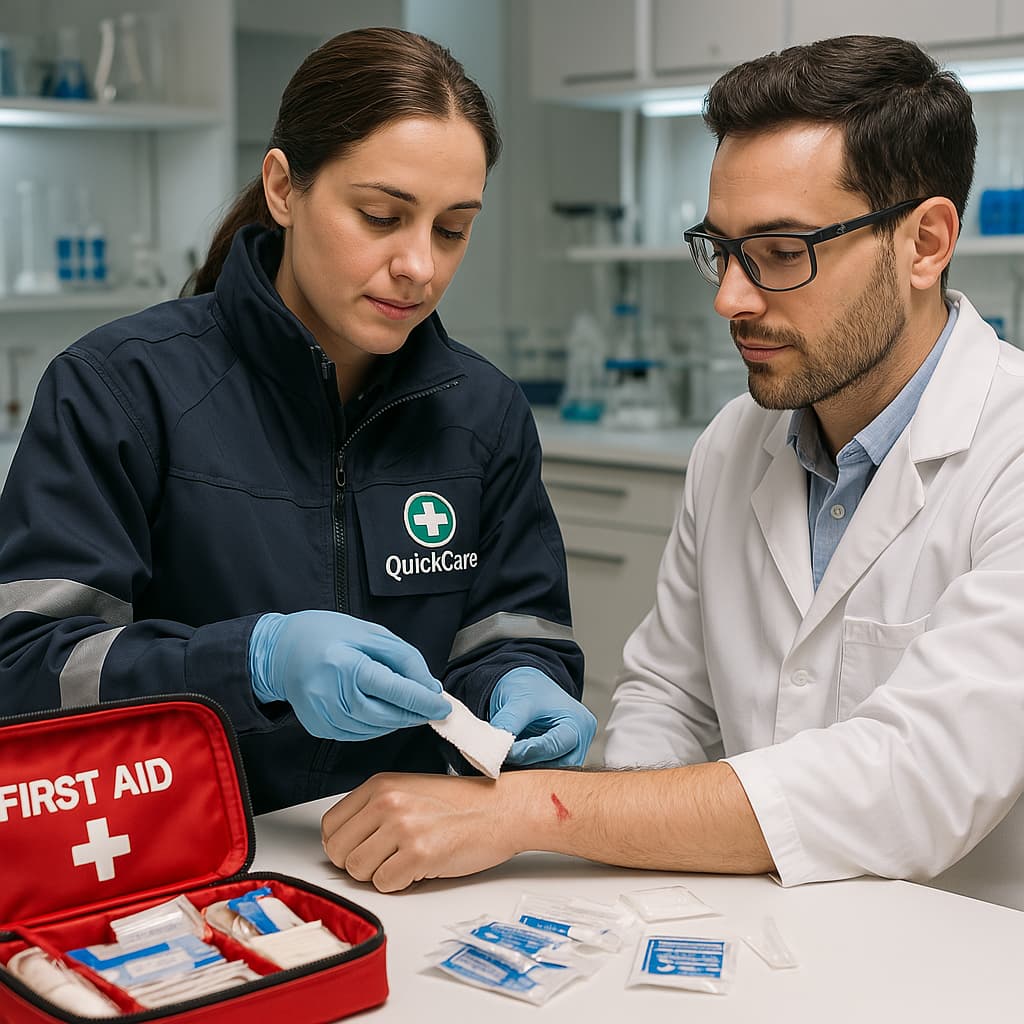
Even strong safety programs can’t eliminate every exposure or injury. QuickCare provides on-site first aid for chemical splashes, thermal burns, sharps injuries, and other lab incidents—helping you reduce escalation risk and capture the documentation needed for internal review and compliance.
Lab-Aware Clinical Response
Support for common lab injuries including exposures, burns, cuts from glassware/sharps, and eye irritation incidents.
Faster Intervention, Less Escalation
On-site care can reduce the chance that minor injuries become major disruptions or costly off-site visits.
Workplace Documentation Support
Clear, consistent incident documentation helps with internal investigations, hazard reviews, and compliance processes.
On-Site Coordination
We coordinate with supervisors and site protocols to respond without creating unnecessary disruption in controlled areas.
First-Aid Response
Professional on-site care.
$525 per visit*
- check_circle On-site professional medical attention
- check_circle Care for common lab injuries/exposures
- check_circle Complete incident documentation
- check_circle All necessary basic medical supplies included
- check_circle Available 24/7 for response needs
*Does not include TDaP vaccine(s), if ordered.
Compliance Support for Laboratory Operations
Lab safety depends on engineering controls, training, and operational discipline. QuickCare strengthens the services side of your program—fit testing, medical clearance workflows, first aid readiness, and documentation.
Respiratory Protection
Fit testing, training, and documentation support for 29 CFR 1910.134 so respirator users are properly evaluated and tested before use and at required intervals.
Medical Services & First Aid
On-site first-aid response supports readiness expectations under 29 CFR 1910.151 and improves documentation quality for incident review and corrective action.
Laboratory Standard Support
Labs operating under 29 CFR 1910.1450 benefit from consistent PPE practices, exposure response readiness, and documentation that supports Chemical Hygiene Plan execution.
Bloodborne Pathogens Readiness
For labs handling human specimens, our incident response documentation and readiness support programs aligned to 29 CFR 1910.1030 and internal post-exposure workflows.
Common Lab Hazards & Practical Coverage
QuickCare focuses on on-site services that reinforce your controls: respiratory protection readiness, drug-free workplace support, and rapid first aid for injuries and exposure events.
| Hazard Type | Examples | What Can Go Wrong | QuickCare Service | Operational Benefit |
|---|---|---|---|---|
| Chemical | Solvent vapors, acids/bases, formaldehyde, sensitizers | Inhalation exposure, burns, delayed symptom onset | Respirator Fit Testing, First-Aid Response | Better respiratory protection readiness + faster on-site intervention and documentation |
| Biological | Clinical specimens, cultures, aerosol-generating steps | Exposure incidents, contamination events, sharps injuries | Respirator Fit Testing (as applicable), First-Aid Response | Improved PPE readiness + incident documentation that supports internal post-exposure workflows |
| Sharps | Needles, blades, broken glassware, capillary tubes | Punctures, lacerations, exposure risk | First-Aid Response | Immediate care, triage guidance, and consistent reporting to support corrective action |
| Physical | Cryogens, autoclaves, repetitive pipetting | Burns, cold injuries, cumulative strain | First-Aid Response | Early intervention to reduce escalation and lost time |
| Operational Safety | Centrifuges, compressed gases, wet floors | Impact injuries, slips/falls, equipment-related injuries | Drug & Alcohol Testing, First-Aid Response | Reduced impairment risk + on-site care when incidents occur |
| Compliance & Documentation | Audits, training records, fit test records, incident logs | Gaps during inspections or incident investigations | All services (documentation included) | Centralized, consistent documentation that’s easier to retain and reference |
Benefits for Laboratory Teams
Practical outcomes that matter: fewer disruptions, improved readiness, stronger documentation, and safer day-to-day operations.
Stronger Safety Culture
Visible, consistent on-site programs reinforce expectations and help teams treat safety as part of daily lab work—not a once-a-year event.
Audit-Ready Documentation
Fit tests, medical clearance support, and incident reports are captured consistently—helpful for audits, internal reviews, and corrective actions.
Less Downtime
On-site services reduce time lost to off-site clinics, keep teams near the work, and help labs maintain coverage during testing or incidents.
Reduced Incident Escalation
Fast first-aid response and consistent documentation helps minor injuries stay minor and supports smart decisions about follow-up care.
Lower Total Cost of Incidents
Fewer off-site visits, less lost time, and fewer escalations help reduce the downstream cost of injuries and disruptions.
Recruitment & Retention Signal
Demonstrating proactive safety support helps labs attract and retain talent—especially for roles with higher exposure risk.
Frequently Asked Questions
Common questions about laboratory safety services and on-site compliance support.
How often is respirator fit testing required for laboratory personnel?
OSHA requires respirator fit testing:
- Before an employee first uses a tight-fitting respirator
- At least annually thereafter
- When switching respirator facepieces (size, style, model, or make)
- When physical changes could affect fit (e.g., significant weight change, facial scarring, major dental work)
QuickCare brings fit testing on-site and provides documentation to support audits and internal program tracking.
Which lab roles typically need respirator fit testing?
Fit testing applies to employees who wear tight-fitting respirators as part of their job. In labs, that may include:
- Researchers handling powders, aerosols, or volatile chemicals
- Clinical lab personnel where respiratory protection is part of the hazard assessment
- Facilities or maintenance staff entering controlled areas (as required by site policy)
- Teams supporting spill response or decontamination workflows
During consultation, we map service delivery to your hazard assessment and operational needs.
What types of drug testing are most appropriate for lab environments?
Common program elements for labs include:
- Pre-employment: screening before onboarding
- Random: deterrence and ongoing compliance
- Post-incident: after safety incidents or significant errors
- Reasonable suspicion: when observable indicators suggest impairment
QuickCare offers rapid point-of-care testing and lab confirmation options depending on your policy requirements.
What OSHA regulations commonly affect laboratories?
Laboratories often operate under multiple OSHA standards, depending on hazards and activities:
- Laboratory Standard (29 CFR 1910.1450): chemical hygiene program requirements
- Respiratory Protection (29 CFR 1910.134): selection, medical evaluation, fit testing, training
- Hazard Communication (29 CFR 1910.1200): labeling, SDS, and training
- Bloodborne Pathogens (29 CFR 1910.1030): for human specimens/OPIM
- Medical Services & First Aid (29 CFR 1910.151): readiness expectations
QuickCare’s services support core parts of these programs—particularly fit testing and readiness for injury/exposure response.
How does QuickCare minimize disruption to lab operations?
- On-site delivery: reduces off-site travel and keeps staff near their work
- Staggered scheduling: maintains coverage in controlled areas
- Efficient workflows: streamlined intake and repeatable procedures
- Scale when needed: multiple technicians for larger groups
We coordinate in advance so the service fits your site protocols and shift needs.
Can services be customized for different types of labs?
Yes. We tailor delivery based on your hazards, roles, and facility constraints. Examples:
- Fit testing aligned to the respirators and access policies you use
- Drug testing panels and workflows matched to your program
- First-aid response readiness aligned to your incident protocols
A consultation helps scope the right coverage and schedule.
Upgrade Laboratory Safety Without Slowing Work
Bring fit testing, drug testing, and on-site first aid directly to your facility—built for lab workflows and backed by clean documentation.