Verify the Seal
Tight-fitting respirators must seal against the face. Fit testing confirms the selected make, model, and size can maintain a reliable seal during use.

QuickCare fit tests your team at your facility across the San Francisco Bay Area, with minimal disruption to production. We provide qualitative and quantitative fit testing, optional medical clearance with pulmonary function testing (PFT), and documentation built to support your OSHA respiratory protection program.
Built for employers, safety managers, and site leads coordinating a respiratory protection program for their workforce — not individual walk-in appointments. If you need fit testing for yourself as an individual, ask your employer to schedule with QuickCare.
A respirator is only protective when it fits correctly. Fit testing verifies the seal, helps validate your respiratory protection program, and supports safer outcomes for employees exposed to airborne hazards.
Tight-fitting respirators must seal against the face. Fit testing confirms the selected make, model, and size can maintain a reliable seal during use.
Dust, fumes, and aerosols can pose serious health risks. Fit testing supports respiratory protection by validating that the chosen respirator can perform as intended for the wearer.
Fit testing is part of a compliant respiratory protection program (29 CFR 1910.134) for tight-fitting respirators. Clear records reduce audit friction and standardize your annual cycle.
Choose the method that matches your respirator type and program requirements. We'll help you plan the right approach for your workforce.
A pass/fail method that relies on the wearer detecting a test agent by taste or smell, indicating leakage at the face seal. Commonly used for filtering facepieces (including many N95 programs) and certain half-mask applications where allowed. A typical QLFT session runs about 15–20 minutes per employee.
Uses an instrument to measure leakage and generate a numerical fit factor. Required for some respirator types and higher-control programs, and commonly used for full-face respirators. QNFT typically takes about 20–30 minutes per employee, including equipment setup.
Most respiratory protection programs require medical clearance before an employee is fit tested. The process starts with OSHA's mandatory medical questionnaire, reviewed by a physician or other licensed healthcare professional (PLHCP), who provides a written recommendation on the employee's ability to use a respirator. When indicated, we can add pulmonary function testing (PFT) — spirometry that measures lung capacity and airflow — as part of that evaluation.
 medical_services Licensed Healthcare Professionals
 location_on We Come To You
Sending employees off-site burns time and creates scheduling headaches. QuickCare brings fit testing to your workplace, builds an efficient flow for your team, and delivers documentation the same day.
We build a schedule that keeps production moving, then arrive ready to run an efficient, documented fit testing day.
Share headcount, respirator types (including whether any employees need testing on more than one assigned respirator), and preferred windows. We propose an on-site plan that fits your shift structure.
We confirm requirements (QLFT vs. QNFT, clean-shaven policy, medical clearance needs) and align on the on-site setup.
Our team runs the fit testing flow with OSHA-aligned protocols and keeps the day moving with organized time slots.
You receive fit test records and any included training or clearance documentation — ready for storage and audit support.
Make fit testing day predictable. Here's what you get from QuickCare and what your team should do ahead of time.
Need broader program support? Pair fit testing with on-site first aid, CPR/AED training, or your respirator medical evaluations through ProTrain.
For qualitative testing, we recommend avoiding eating/drinking (except water) immediately beforehand to reduce reschedules. We'll confirm exact prep guidance during scheduling.
Built for operations: reduce coordination effort, keep people working, and maintain clean documentation for your safety program.
Eliminate travel time and run fit testing in planned blocks that match your shift schedule.
Documentation that's complete, organized, and easy to store — so annual cycles are straightforward.
Efficient workflows for onboarding, annual refreshes, and multi-department rollouts.
Support for both QLFT and QNFT depending on respirator type and program requirements.
Practical prep and scheduling support so you avoid common reschedule issues, like facial hair at the seal.
Options for early, standard, or off-peak blocks depending on staffing and operational constraints.
Choose fit testing only, or bundle fit testing with medical clearance and training for a streamlined compliance package.
One respirator (QLFT or QNFT as applicable)
$87.00per person
Fit Test + Medical Clearance + Training
$149.00per person
With pulmonary function testing (PFT)
$110.00per person
Notes: On-site scheduling is optimized for groups. Final logistics may depend on location, headcount, respirator types, and whether your program requires quantitative testing or medical clearance. We'll confirm scope and scheduling during intake.
Practical guides for scheduling, staffing, and documenting an on-site fit testing day.
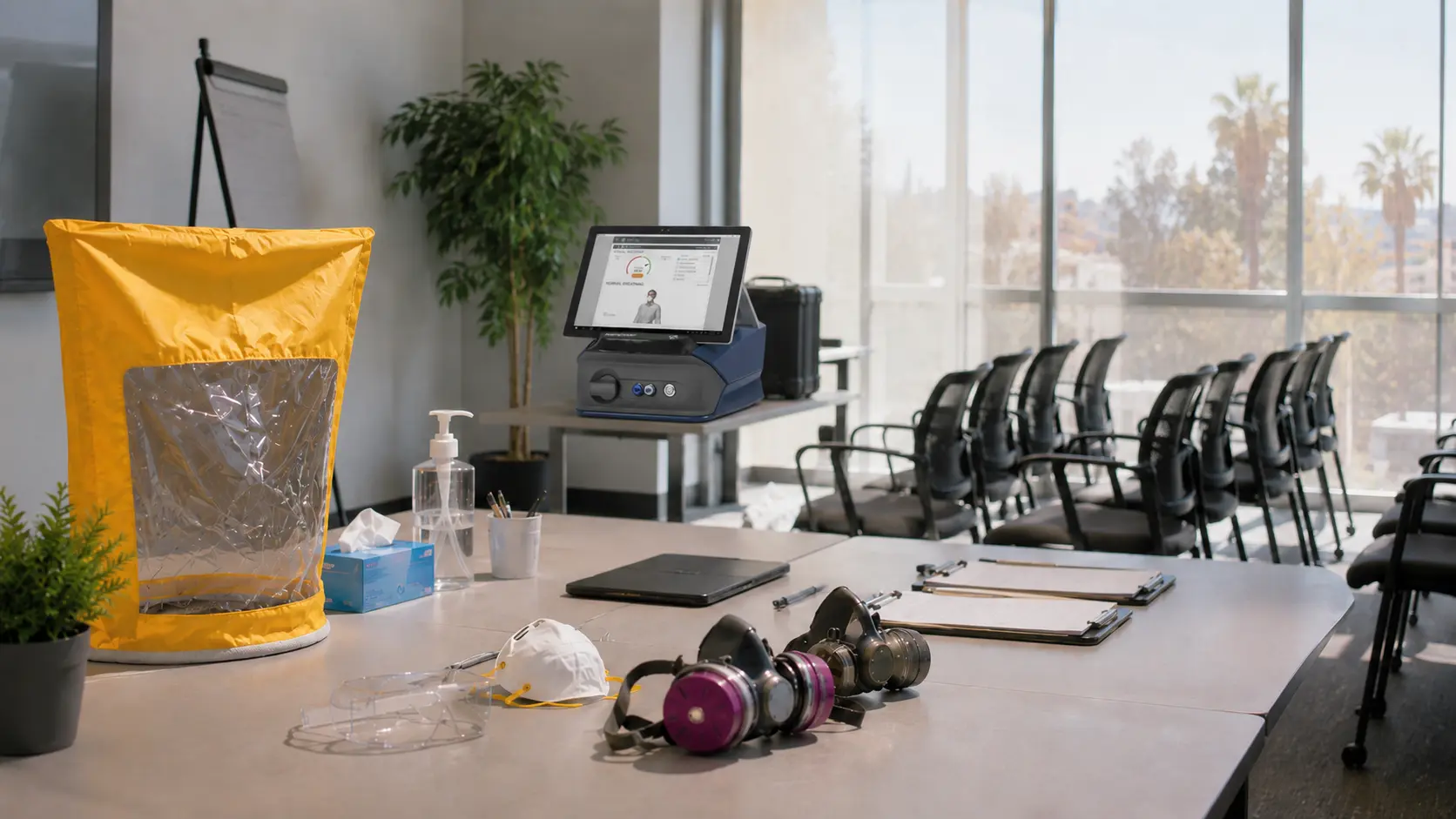
Room setup, scheduling, and staffing for a fit testing day with 25+ employees.
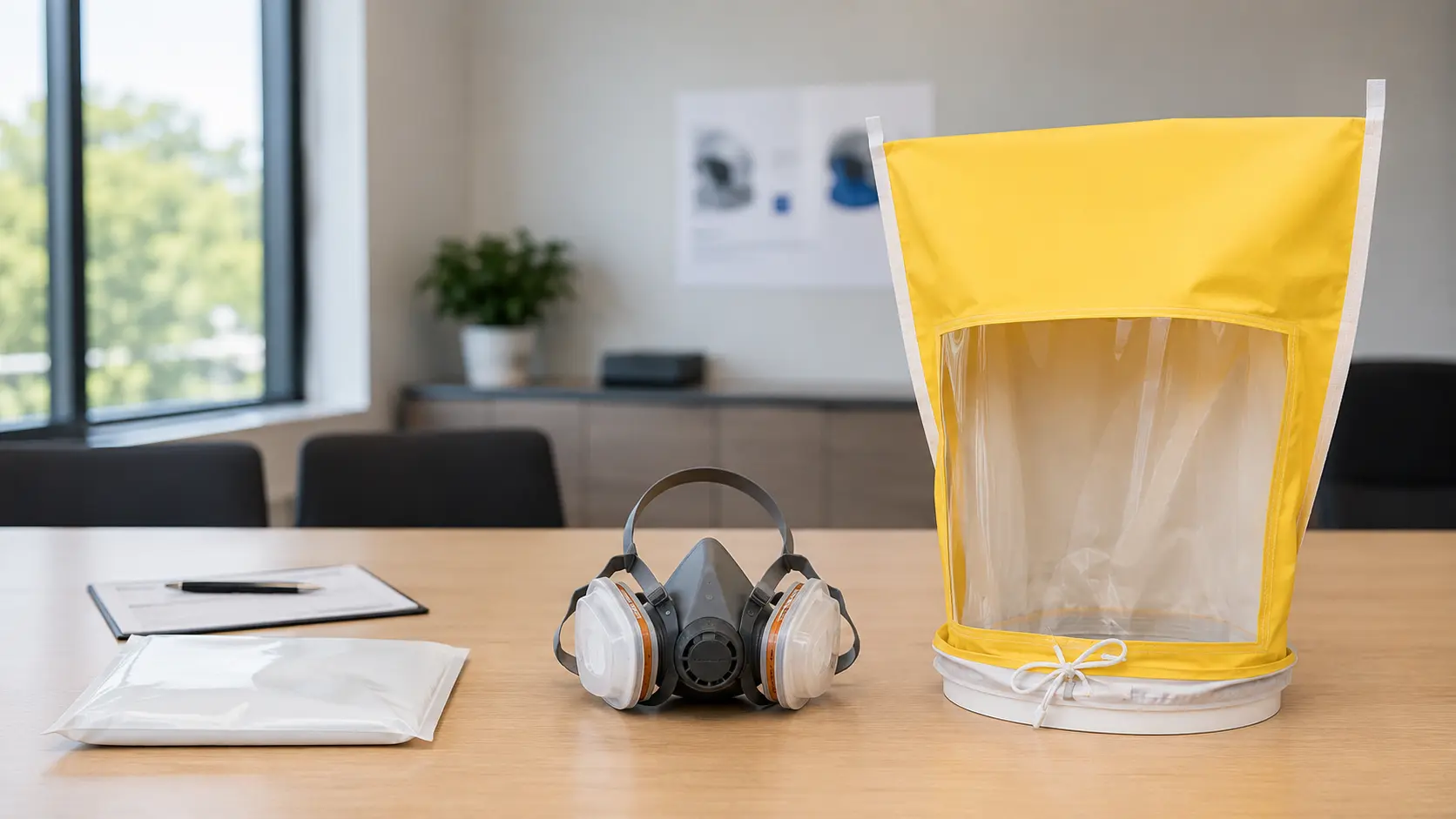
What has to happen first, and how the two evaluations fit together.
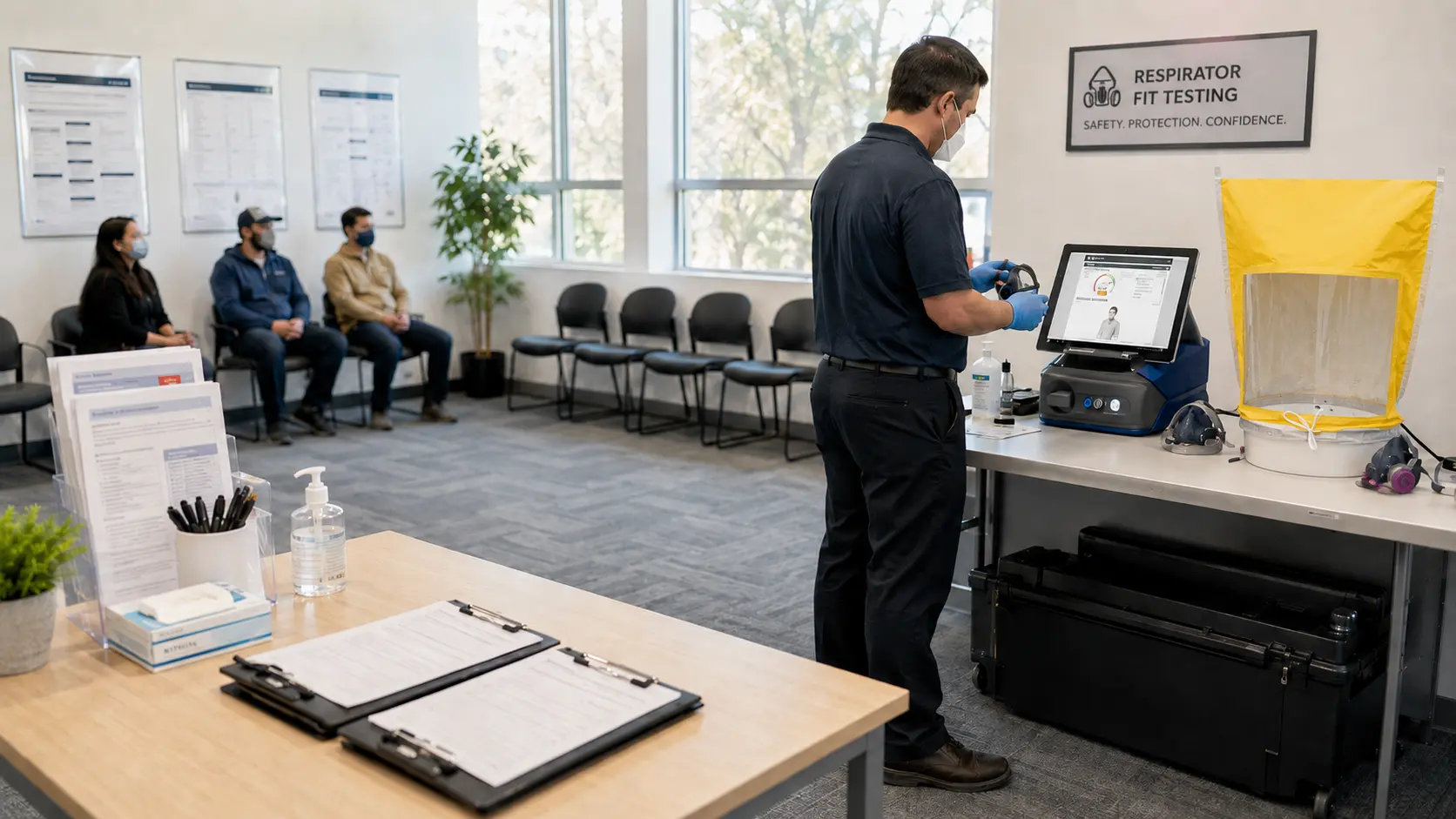
Throughput planning for QLFT vs. QNFT and multi-shift teams.
Answers for safety managers, HR, and operations teams planning respirator fit testing.
Fit testing is required for tight-fitting respirators:
Qualitative (QLFT) is pass/fail and depends on the wearer detecting a test agent by taste or smell. Quantitative (QNFT) uses an instrument to measure leakage and provides a numerical fit factor. We'll help you align method selection with respirator type and program requirements.
We support fit testing for tight-fitting respirators, including:
Yes, in most programs. The employee completes OSHA's mandatory medical questionnaire, a physician or other licensed healthcare professional (PLHCP) reviews it (and may order pulmonary function testing), and provides written clearance before fit testing. We can bundle this with your on-site day.
Yes. For tight-fitting respirators, employees must be clean-shaven anywhere the respirator seals against the face. Facial hair at the seal can prevent an adequate fit and may require rescheduling or a loose-fitting PAPR alternative.
The employer provides a different respirator make, model, size, or style, and the employee is re-tested before using it in the workplace. If no tight-fitting respirator achieves a proper seal, a loose-fitting PAPR that doesn't require a face seal may be the next option.
Fit test records typically include:
If included in your package, we also provide medical clearance documentation and training completion records.
Yes. Training is included in the Complete Package or available as a standalone service ($87.00 per session). Training covers why the respirator is needed, limitations, donning/doffing, seal checks, maintenance, storage, and program basics.
Find Respirator Fit Testing services in these locations:
On-site respirator fit testing throughout the San Francisco Bay Area and Northern California
On-site respirator fit testing in Georgia
Don't see your area? Contact us to learn about service availability in your location.
Looking for city-by-city coverage? See our Bay Area service coverage hub for local fit testing availability.
Pair fit testing with other on-site services employers commonly bundle for their safety program.
Keep your team protected and your documentation organized. Tell us your headcount and respirator types, and we'll propose an on-site plan.