Dispatch & Intake
A structured intake call to capture injury details, location specifics, and any immediate safety concerns—so the responder arrives prepared.

QuickCare dispatches experienced medical professionals to your facility for non-life-threatening injuries—reducing disruption, strengthening documentation, and helping safety teams control OSHA outcomes.
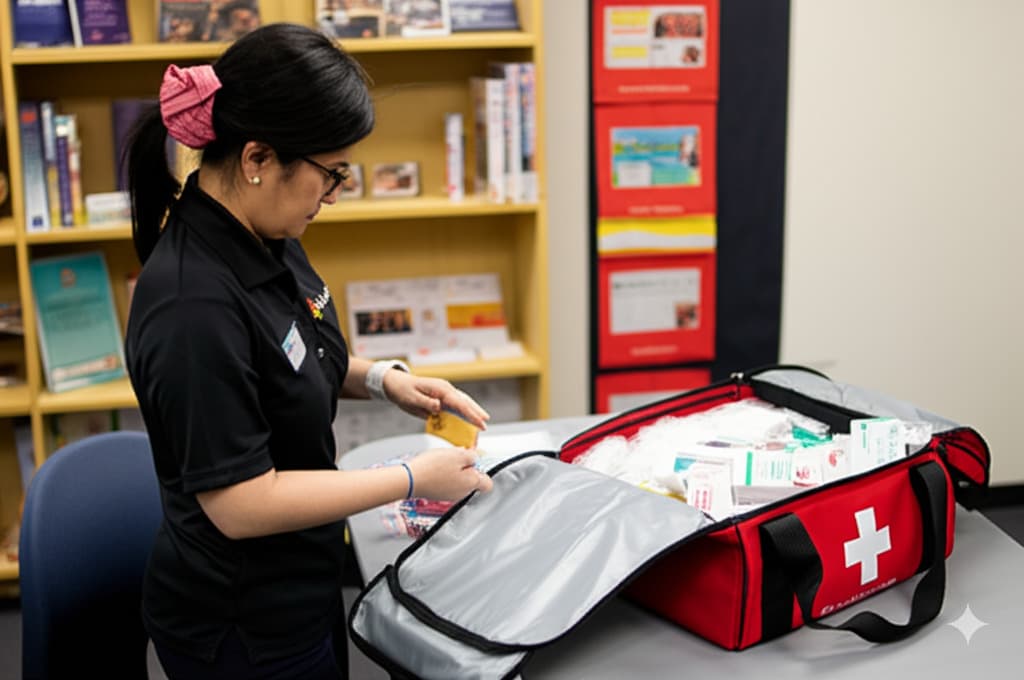
When an injury happens, sending an employee off-site is expensive and disruptive. QuickCare brings mobile first aid to your workplace so your team can receive prompt evaluation and care without losing hours to travel, waiting rooms, or unnecessary escalation.
We support safety, HR, and operations teams with a repeatable response workflow: fast dispatch, on-site assessment and treatment, and clear incident documentation designed for compliance and internal reporting.

A practical on-site injury response program: clinician dispatch, workplace-friendly treatment, and documentation that supports your safety process.
A structured intake call to capture injury details, location specifics, and any immediate safety concerns—so the responder arrives prepared.
Appropriate first aid for common workplace injuries, with clear guidance on when higher-level care is recommended.
HIPAA-aware reporting designed for workplace use: care summary, recommendations, and timestamps to support internal workflows.
If the injury needs urgent care, ER, or specialty follow-up, we help coordinate next steps to reduce delays and confusion.
We align response expectations to your location and access requirements. Confirm coverage on the service map.
A repeatable approach that helps safety teams standardize injury response—especially across multi-shift and multi-site operations.
Traditional off-site care often turns minor incidents into major disruptions. QuickCare keeps the response close to the work—so you can reduce downtime, improve documentation quality, and support your safety program.
Our on-site workflow helps safety teams make clearer “first aid vs. medical treatment” determinations and avoid unnecessary escalation that can impact recordability.
Treating on-site reduces time away from the floor—no travel, no waiting rooms, and no supervisor time spent transporting employees off-site.
Immediate response builds trust. Employees are more likely to report injuries early, which supports better outcomes and better prevention.
A fixed on-site visit can help reduce avoidable urgent care/ER utilization and the administrative burden that follows off-site care.
Consistent reporting supports incident review, claims handling, internal audits, and trend analysis—without chasing paperwork across clinics.
Prompt assessment and practical first aid reduce the chance of a small issue becoming a bigger medical event later.
A workplace-friendly workflow designed for safety teams: fast intake, on-site care, and documentation that’s ready for internal reporting.
Your designated contact calls QuickCare. We collect key details (mechanism, location, symptoms, access instructions) so the responder can arrive prepared.
QuickCare dispatch coordinates travel and arrival. You’ll know who is responding and what to expect at the point of contact.
We evaluate the injury and provide appropriate first aid on-site. If the injury needs higher-level care, we clearly recommend next steps.
You receive a clear incident report: assessment, care provided, recommendations, and timestamps—useful for OSHA recordkeeping and internal review.
If follow-up care is appropriate (urgent care, ER, occupational medicine, or specialist), we help coordinate a smooth handoff.
QuickCare is designed for non-life-threatening workplace injuries. Compare typical cost and time impacts versus off-site care.
| Comparison Factor | QuickCare On-Site First Aid Recommended | Urgent Care Visit | Emergency Room Visit |
|---|---|---|---|
| Average Cost | $525 — fixed cost per visit | $700–$1,500 — varies by treatment | $1,500–$3,000+ — excludes ambulance fees |
| Typical Response / Wait Time | 54 minutes† | 2–3 hours | 3–6+ hours |
| Treatment at Workplace | check_circle | cancel | cancel |
| Minimizes Lost Work Time | check_circle | cancel | cancel |
| Supports OSHA Recordkeeping Decisions | check_circle | cancel | cancel |
| Workplace-Friendly Documentation | check_circle | Partial | Partial |
| Transportation Required | None (we come to you) | Personal / company | Personal / ambulance |
* Costs and time ranges are approximate and may vary by region, insurance, facility load, and treatment type.
Operational results vary by site and program maturity. These metrics reflect observed outcomes across typical QuickCare client environments.
QuickCare helps employers operationalize first aid readiness—fast response capability, trained care, and documentation that supports compliance workflows.
OSHA requires employers to ensure medical services and first aid are available to employees. For sites without an on-site clinic, that typically means trained responders, accessible supplies, and a reliable process when injuries occur.
For detailed compliance context, visit our OSHA compliance documentation page.
Common questions from safety teams evaluating workplace injury response programs.
QuickCare is designed for common non-life-threatening workplace injuries, including:
If an injury requires higher-level evaluation or treatment, we provide stabilization guidance and recommend the appropriate next step (urgent care, ER, occupational medicine, or specialist).
For life-threatening emergencies, always call 911 first.
Our current average response time across typical service areas is 54 minutes from call intake to arrival.†
For higher-risk operations or sites with frequent needs, dedicated staffing options may be available. Confirm coverage on the service map.
QuickCare supports OSHA recordkeeping decisions by reducing unnecessary off-site escalation and documenting care clearly:
Primary focus remains appropriate care for the employee. When higher-level care is needed, we recommend it.
After each response, QuickCare provides HIPAA-aware documentation that typically includes:
This supports OSHA 300 decisions, internal incident review, and claims coordination.
No. QuickCare is for non-life-threatening workplace injuries where on-site first aid can reduce disruption and improve documentation.
For severe bleeding, chest pain, stroke symptoms, loss of consciousness, major trauma, or any life-threatening emergency, call 911 immediately.
Cost savings typically come from multiple sources:
Many clients report meaningful reductions in injury-related costs after implementing consistent on-site response.
QuickCare helps employers reduce disruption from workplace injuries with mobile on-site first aid, OSHA-aware documentation, and a repeatable response workflow.
† To maintain the integrity of the average response time for typical engagements, data from clients whose operational environments impose external, non-controllable delays (e.g., travel time by boat to remote islands, prolonged security checks at high-security facilities) were mathematically excluded.
‡ Average reduction observed across QuickCare clients utilizing on-site first-aid services. To accurately reflect typical client outcomes, we excluded data from clients with influencing factors (e.g., historically negligible incident rates where any change would appear exaggerated, or those undertaking comprehensive, non-QuickCare-related safety transformations).