What EHS Managers Should Have Ready Before Mobile Fit Testing
Everything an EHS manager should line up before the tester pulls up to the dock — so the visit starts on time and finishes in one block.
The short version
- A mobile fit testing day runs on the organizing you do ahead of time — roster, respirators, and a point of contact.
- Have the roster (with current mobile numbers) and respirator make/model/size in hand; QuickCare handles medical clearance online by SMS, before the visit or on the day.
- Reserve a staging room, name a day-of contact, and send site-access details ahead of time.
- Real delays trace back to missing contact info, unclear rosters, and unknown respirators — not to clearance itself.
Who this is for: EHS, safety, and facilities managers hosting an on-site (mobile) respirator fit testing visit.
Mobile fit testing only saves time if the visit runs without stops. When a tester arrives and the roster is half-built, the phone numbers are wrong, and nobody booked a room, the day stalls — and the downtime you were trying to avoid shows up anyway.
This is the short list EHS managers use to get ready. Work through it ahead of the visit and a full crew can be tested on-site in a single block — including medical clearance, which QuickCare runs online by SMS before or during the appointment.
Have these ready before the visit
If every box below is checked the day before, the tester can start the moment they arrive.
People & paperwork
- Employee roster with department, shift, and a current mobile number
- Medical clearance plan — QuickCare can text employees a clearance link before the visit or on the day; just make sure phone numbers are current
- Shift or department grouping so people arrive in tight blocks
- Any prior fit-test records, if you track renewals
Respirator details
- Respirator make, model, and size for each employee
- Confirmation that the assigned respirator is the one each person actually wears
- A heads-up if multiple respirator models are in use
Site & access
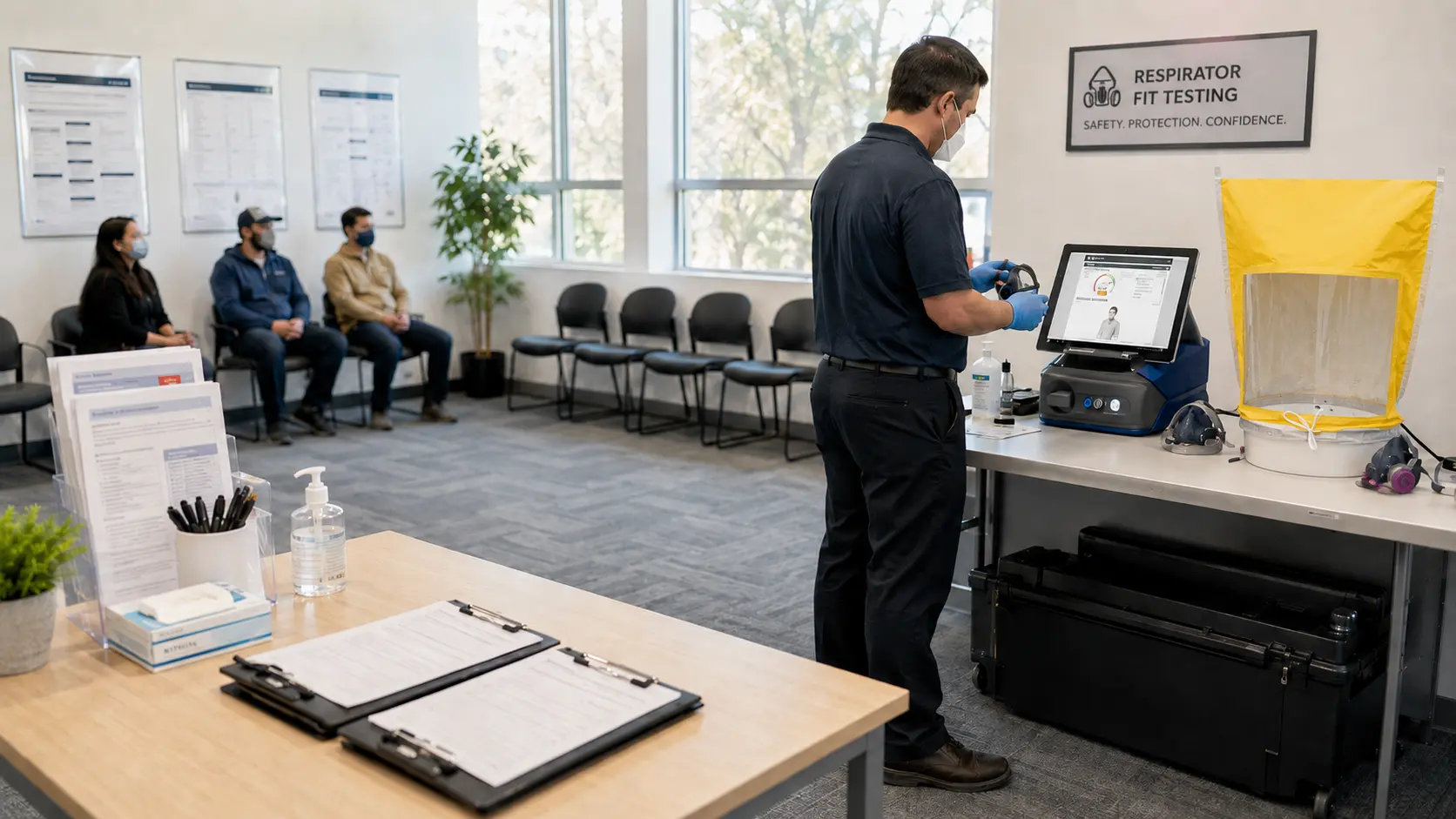
- A private or semi-private testing room plus a nearby waiting area
- Parking, loading-dock, and check-in instructions for the tester
- One named day-of point of contact who can answer questions
- Power access near the testing room, if equipment needs it
Not sure your pre-visit list is complete?
Send QuickCare what you have — roster, shifts, and respirator models — and we will help identify what is missing before the visit.
Where the real delays come from
Almost every delay on a fit testing day is preventable, and most come from a short list of gaps: an unclear roster, contact information that is out of date, and a respirator nobody documented. Close those first.
- Coordinate the clearance workflow. Clearance must come before fit testing, but it does not have to be a scramble — QuickCare texts each employee a link to complete the questionnaire on their phone, before the visit or on the day. The one thing it needs is accurate phone numbers. If you are still untangling the two steps, see medical clearance vs. fit testing.
- Pin down the respirator model. Fit testing is specific to the exact make, model, and size. Guessing on the day means setup changes and stalls.
- Stage the next person. A ready waiting area is the difference between a tester who keeps moving and one who idles between employees.
- Leave a retest buffer. Some employees fail the first attempt for fixable reasons — plan time for it rather than running out of day. The common reasons employees fail guide covers what to head off in advance.
What QuickCare can help coordinate
You do not have to build the whole plan alone. As an on-site provider, we routinely help employers turn a rough headcount into a workable day:
- Right-sizing the schedule to your crew, shifts, and respirator models
- Sequencing employees so the line keeps moving
- Running medical clearance online by SMS — before the visit or on the day — so employees are cleared before respirator fit testing and the records line up
- Planning a single on-site visit for teams across California and the Bay Area
The goal is documentation you can file with confidence — our work supports your respiratory-protection records; it does not guarantee any OSHA or Cal/OSHA inspection outcome.
What trips up the day of the visit
- Building the roster on the day instead of ahead of time.
- Wrong or missing phone numbers, so the online clearance links cannot reach employees.
- No documented respirator make/model/size, so the tester has to chase it down.
- No reserved room, or a room with no nearby waiting area.
- No named point of contact, so every question stops the line.
Frequently asked questions
What is the single most important thing to have ready?
Do we need to know the exact respirator model in advance?
What space do we need to provide?
Can QuickCare help us build the schedule?
Hosting a mobile fit testing visit?
Send us your roster size, shifts, and respirator models and we will help you get ready for a one-day on-site visit.
Plan your on-site visit arrow_forward