How to Plan an On-Site Respirator Fit Testing Day for 25 Employees
A practical planning guide for employers coordinating on-site respirator fit testing — including roster setup, room flow, online medical clearance, day-of scheduling, and the records you should leave with.
The short version
- For about 25 employees, a single on-site fit testing day is usually realistic when the roster, respirator details, and employee flow are organized.
- Respirator medical clearance still comes before fit testing, but it does not have to create a scheduling burden. QuickCare can coordinate clearance online by SMS before the visit or on the day of the appointment.
- The most important prep items are the employee roster, assigned respirator make/model/size, accurate employee contact information, and a day-of point of contact.
- A strong on-site visit should end with organized per-employee fit test records that support your respiratory-protection documentation.
Who this is for: EHS and safety managers, HR coordinators, and operations leads scheduling respirator fit testing for a team.
Pulling employees off-site for respirator fit testing creates avoidable downtime: travel, clinic waiting rooms, staggered appointments, and paperwork that may not line up neatly afterward. An on-site fit testing day solves the operational problem by bringing the testing process to your workplace and moving employees through in a coordinated block.
The key is not making the day complicated. It is making the day organized. QuickCare can help coordinate the roster, testing flow, respirator details, medical clearance, and documentation so your team can be handled on-site with less disruption to the workday.
Medical clearance is still a required step before fit testing, but with QuickCare it does not need to be treated like a separate logistical headache. Employees can complete their clearance questionnaire from their phone through an SMS link, and those clearances can be handled before the appointment or coordinated in real time on the day of service when that is easier for the employer.
How to plan the day, step by step
Work backward from the testing date, but keep it simple: most of the effort is a clean roster and known respirators. The online clearance step is quick to coordinate.
-
Build your employee roster
List every employee who needs testing, their department or crew, their shift, and a current mobile number. The roster is your scheduling backbone — and the phone numbers are what the online clearance workflow runs on.
-
Confirm respirator make, model, and size
Fit testing is specific to the exact respirator a person will wear. Record the make/model/size for each employee so the tester is not guessing on the day.
-
Set up the medical clearance workflow
Clearance must be completed before fit testing, but QuickCare handles it online: employees get a text-message link, complete the questionnaire on their phone, and we review it in real time. Decide whether to send links a few days ahead or have employees complete clearance on the appointment day — both work when phone numbers are accurate.
-
Reserve a testing room and staging area
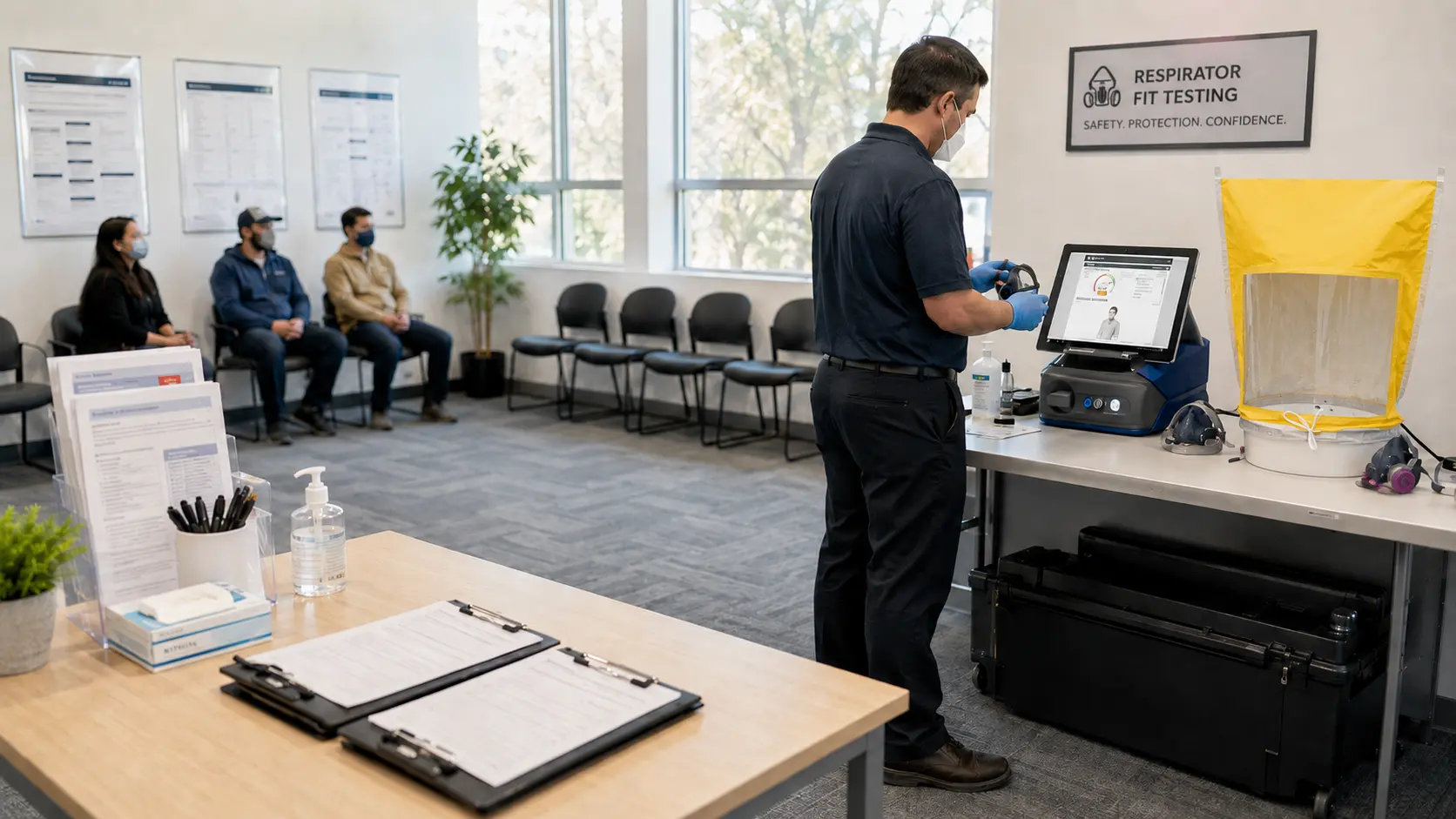
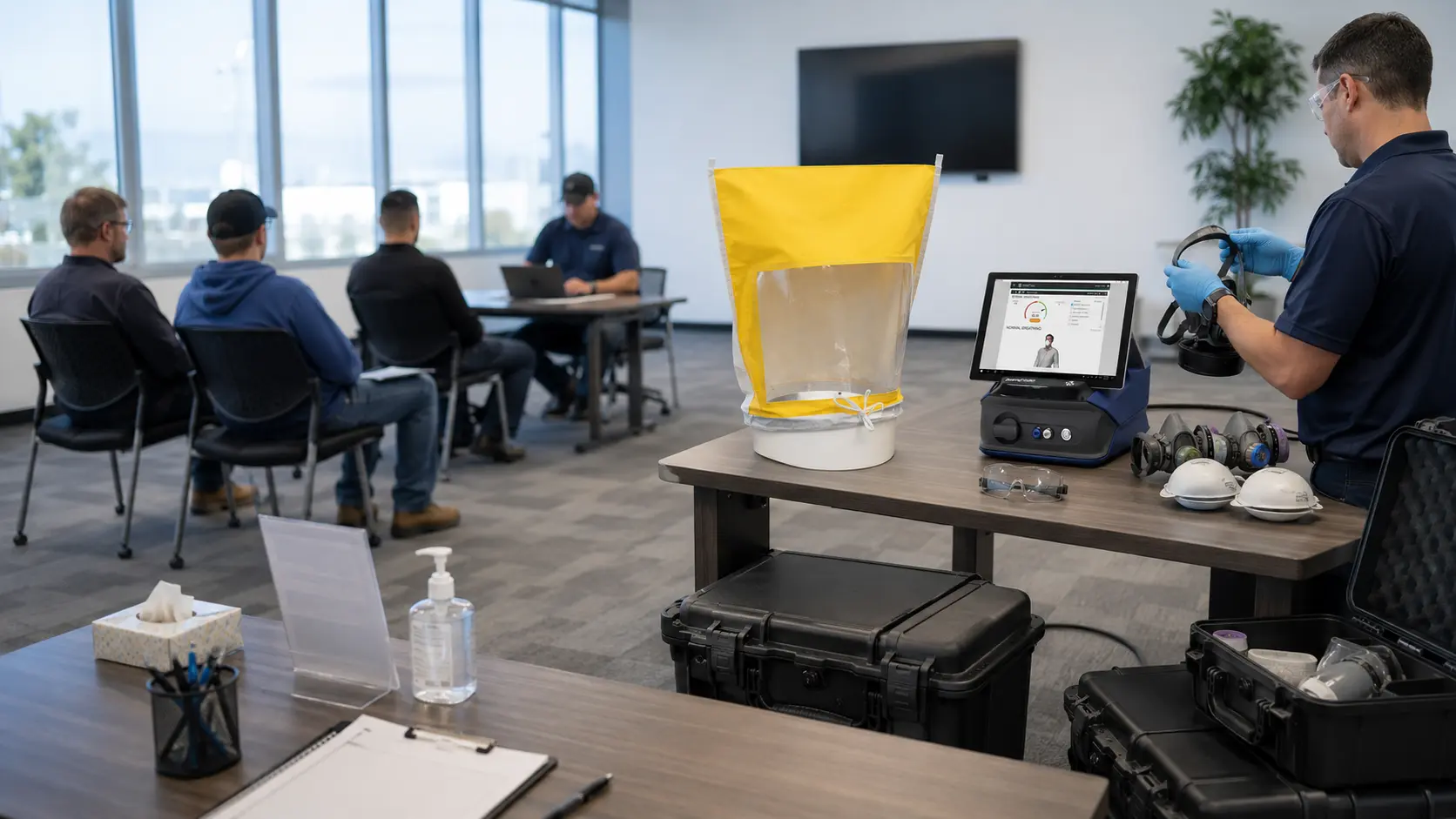
You need one private or semi-private room for testing plus a nearby waiting area so the next employee is ready as soon as the last one finishes.
-
Build a shift-by-shift schedule
Group employees by shift, crew, department, or respirator type. Booking people in tight blocks keeps the tester moving and minimizes downtime on the floor.
-
Share site access and a point of contact
Provide parking, check-in, and room-location details, and name one on-site contact for the day so questions get answered without stopping the line.
Already have a rough roster?
Send QuickCare your headcount, shifts, and worksite and we will turn it into a workable on-site testing schedule.
What to have ready before the tester arrives
If these are in place, a 25-person day usually runs without interruption.
Paperwork
- Employee roster with department, shift, and a current mobile number
- Respirator make / model / size per employee
- Medical clearance plan — links sent ahead, or phone numbers ready so employees can complete clearance on the day
- Any prior fit-test records, if you track renewals
Space and logistics
- A private or semi-private testing room
- A table and chairs
- A nearby waiting area for the next employee
- Access to power, if needed for equipment
- Site access instructions and a day-of point of contact
How respirator medical clearance fits in
Medical clearance and fit testing are separate steps, but they can be coordinated in one smooth workflow.
Medical clearance answers whether the employee can safely wear a respirator. Fit testing answers whether a specific respirator seals properly on that employee's face. Clearance must be completed before the fit test itself, but that does not mean every clearance has to be finished days in advance.
With QuickCare, employees can receive a text message link, complete the medical questionnaire on their phone, and have the clearance reviewed in real time. Some employers prefer to send clearance links before the visit so the roster is clean when testing starts. Others prefer to have employees complete clearance on-site during the appointment day. Both approaches can work.
What matters most is that the process is coordinated: QuickCare has the roster, employees have working phone numbers, the site contact knows the flow, and no employee is fit tested until clearance is complete. If you are still untangling the two steps, the companion guide on medical clearance vs. fit testing breaks them down.
Need fit testing and medical clearance handled together?
Send QuickCare your roster size, worksite location, and assigned respirators. We can help coordinate online clearance and on-site fit testing in one organized workflow.
What you receive after the visit
The point of the day is documentation you can file and defend. For each employee you should come away with:
- The fit-test result
- The respirator model and size tested
- The date of the test
- Employee and employer record details
- Clearance-coordination status, where applicable
These records support your OSHA respiratory-protection documentation and help you organize the files you are required to keep. They do not, on their own, guarantee any OSHA or Cal/OSHA inspection outcome — they are the documentation foundation a program is built on.
What actually slows a fit testing day down
- Sending an incomplete or unclear roster, so nobody knows exactly who is coming.
- Missing or outdated employee phone numbers — the online clearance step needs working numbers.
- Not documenting the respirator make/model/size ahead of time.
- Mixing too many different respirator models into a single block.
- No named day-of point of contact, so every question stops the line.
- No retest buffer, and no plan to collect the documentation afterward.
Frequently asked questions
How long does an on-site fit testing day for 25 employees take?
Do employees need medical clearance before fit testing?
Can employees complete medical clearance the same day as fit testing?
What space do we need to provide on-site?
What documentation do we keep afterward?
Planning a fit testing day for your team?
Tell us your headcount, respirator models, and location, and we will help you map out an on-site schedule.
Request on-site scheduling help arrow_forward