What Records Should Employers Keep After Respirator Fit Testing?
The fit testing day ends; the paperwork stays. Here is what belongs in each employee's fit-test record and where it fits in your respiratory-protection file.
The short version
- Each employee's fit-test record should capture the result, the exact respirator, the date, and who was tested.
- Keep clearance status connected to the matching fit-test result.
- Know your retest triggers — a new respirator model or a change in fit are the common ones.
- These records support your respiratory-protection documentation; they do not guarantee an inspection outcome.
Who this is for: Employers, EHS managers, and HR coordinators maintaining respiratory-protection records.
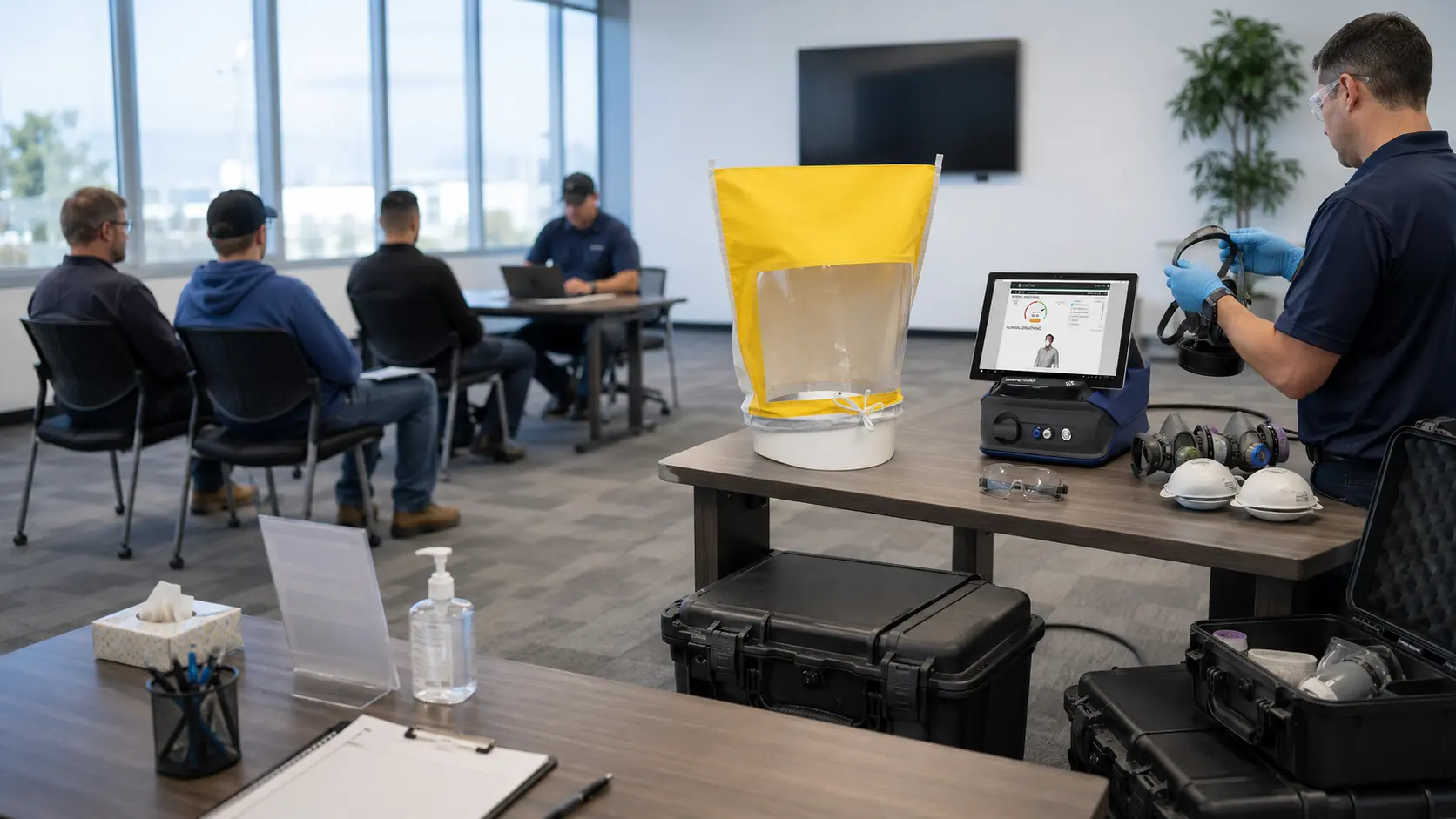
Fit testing produces a deliverable: a record. The value of an on-site day is not only that everyone got tested — it is that you walk away with documentation you can file, find, and explain later.
This guide covers what each fit-test record should contain, where it sits in your respiratory-protection file, and what events should prompt a retest. Keep it practical: a record you can locate in thirty seconds is worth more than one buried in an inbox.
What each fit-test record should capture
For every employee tested, your record should make each of these easy to read at a glance.
| Record element | What it captures | Why it is kept |
|---|---|---|
| Fit-test result | Pass or fail for the test performed | It is the core outcome the record exists to document |
| Respirator make, model & size | The exact respirator that was tested | A fit test only applies to the specific respirator used |
| Date of test | When the test was performed | Drives the renewal cycle and shows the record is current |
| Employee identification | Who was tested (name and employer record details) | Ties the result to a specific person in your program |
| Test method | Qualitative or quantitative | Documents how the result was reached |
| Clearance relationship | Link to the employee's current medical clearance | Shows the employee was cleared before being fit tested |
Want documentation that is ready to file?
QuickCare leaves you with clean, per-employee fit-test records from every on-site visit — organized to drop straight into your respiratory-protection file.
Where these records fit in your respiratory-protection file
Fit-test records do not live on their own. In most programs they sit inside the broader respiratory-protection file alongside the written program, each employee's medical clearance, and training records.
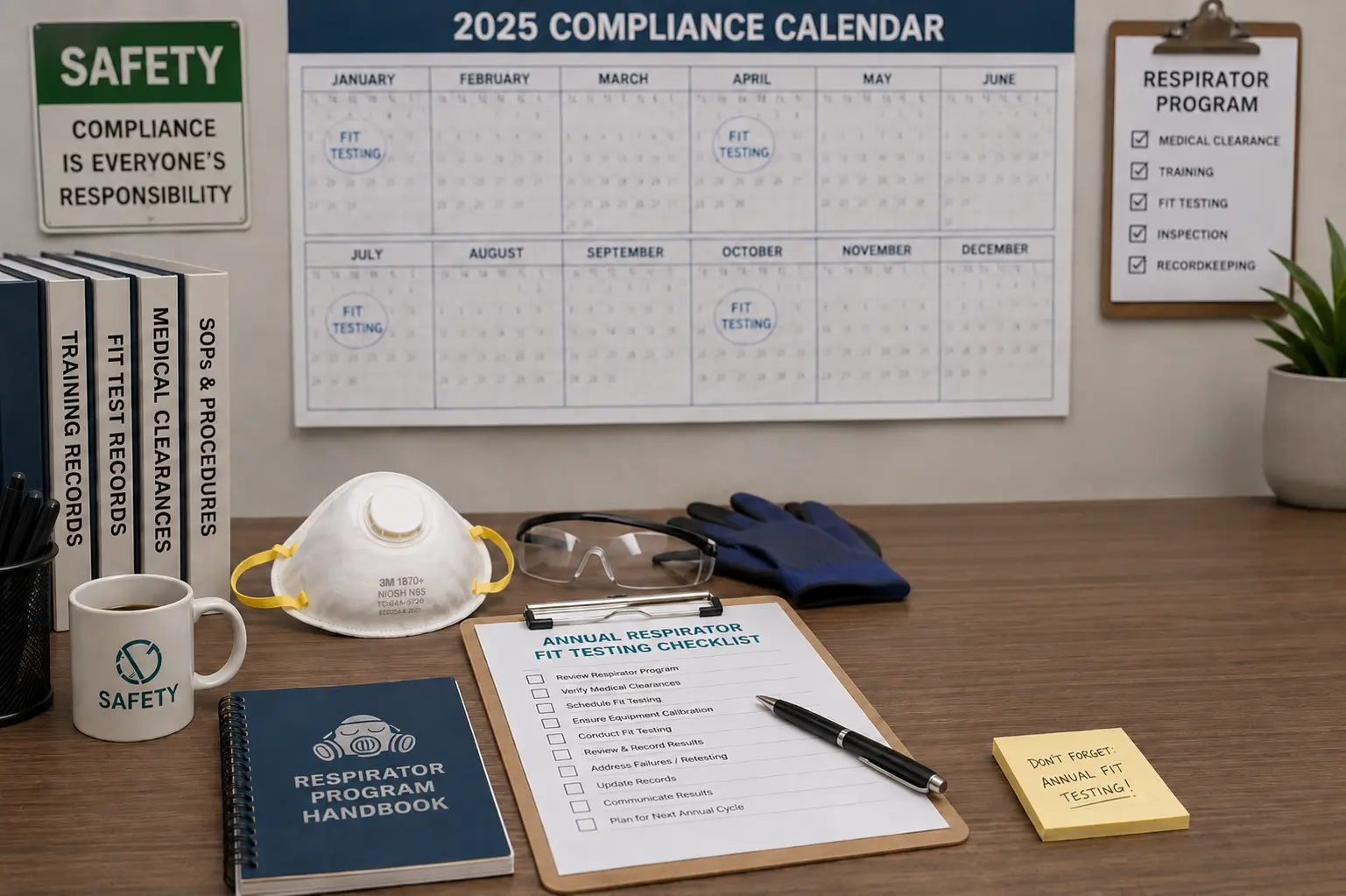
The practical goal is a per-employee view: for any one person you can pull their clearance status, their fit-test result, the respirator that was tested, and the dates — without cross-referencing three systems. When clearance and fit testing are documented together, the file is far easier to organize and review. If those two steps still get conflated, the clearance vs. fit testing guide untangles them.
For the program-level documentation context, our respirator fit testing documentation page covers how these pieces sit together.
Common retesting triggers to watch for
A current record can stop being current. These are the events that typically call for a fresh fit test.
When a retest is usually needed
- The employee is assigned a different respirator make, model, or size
- A physical change that could affect the face-to-respirator seal (notable weight change, dental work, facial surgery, scarring)
- The employee, supervisor, or program administrator reports a change in fit
- Your program's renewal cycle has come due for that employee
A note on compliance
This guide describes documentation practices that help employers organize their respiratory-protection records. Specific retention periods, required record elements, and program obligations vary by jurisdiction and by the standard that applies to your workplace. QuickCare supports your respiratory-protection documentation and helps employers keep records organized — we do not guarantee any OSHA or Cal/OSHA inspection outcome. Confirm your program's requirements with your internal EHS team and counsel.
Frequently asked questions
What is the minimum a fit-test record should include?
How long should we keep fit-test records?
What usually triggers a retest?
Does QuickCare keep our records for us?
Want documentation you can actually file?
We provide clear, per-employee fit-test records from every on-site visit so your respiratory-protection file stays organized.
Talk through your records arrow_forward